- July 21, 2026
- AI, Generative AI, Mental Health, Neuroscience, Psychiatry, Psychology, Psychotherapy
Artificial intelligence is altering mental health care at an extraordinary rate. The evidence to date suggests a dual reality: genuine opportunities to expand access and improve outcomes coexist with serious risks of bias, privacy breaches, cognitive decline, and patient harm. Through this article, we attempt to cover in summary and in direct language, the opportunities to expand access and improve AI care; the consequences and risks in the dimensions of algorithmic bias, privacy, cognitive dependency and disqualification, dangerous responses, and the indiscriminate use of people in the massive use of generative AI; and finally, we advocate for the need to responsibly integrate AI and mental health. Whether AI ultimately serves as a complement to human expertise or a substitute—and whether its benefits are distributed equitably—depends on the choices AI regulators, clinicians, neuroscientists, psychiatrists, psychologists, and AI developers make today. A precautionary approach, rooted in rigorous evidence, transparent regulation, and the preservation of human therapeutic relationships, offers the best way forward.
The integration of artificial intelligence into mental health care represents a significant advancement, with the potential to broaden access, improve diagnostic precision, and facilitate individualized treatment. However, as AI-powered tools such as large language models and generative AI chatbots are rapidly deployed in clinical and public contexts, recent studies have identified considerable risks, including computational bias, privacy violations, cognitive deskilling, and potential patient harm. This article briefly reviews current research on both the positive effects and challenges of AI in mental health, arguing that robust regulation, comprehensive clinician and psychological education, and the development of ethical guidelines are necessary to ensure that AI enhances rather than compromises mental health care.
Lately, artificial intelligence has evolved beyond back-end statistical applications to serve as what Neaçsu (2026) terms “emotional infrastructure”: foundational systems that shape how individuals navigate their inner experiences. AI chatbots now offer therapeutic conversations, and algorithms screen speech for indicators of depression, promising affordability, scalability, and continuous availability in a field characterized by persistent shortages of human providers. Notably, over 55% of younger Americans report greater comfort discussing mental health concerns with a confidential chatbot than with a human therapist (Kaplan et al., 2025).
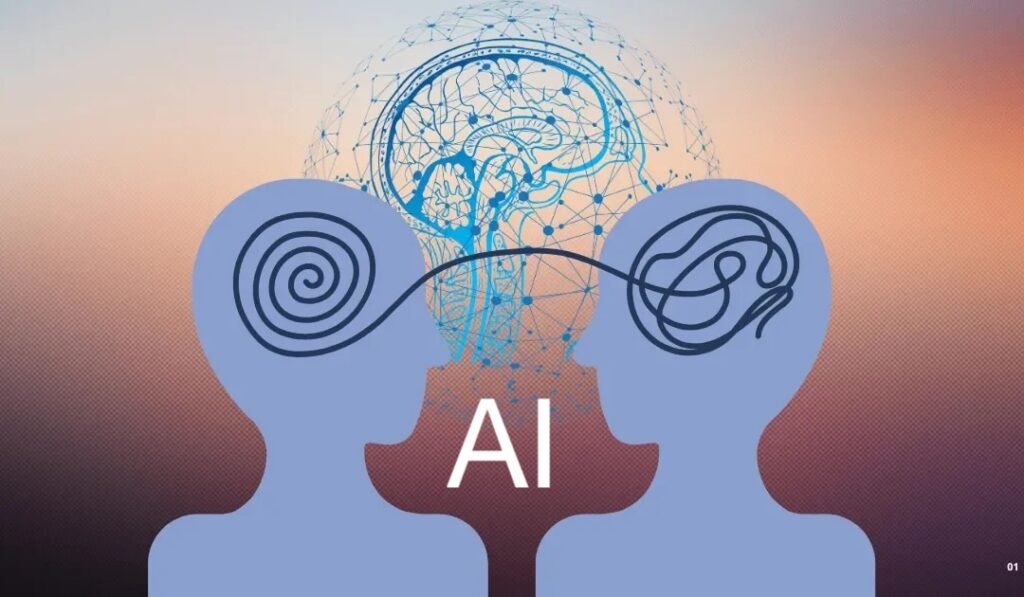
However, as noted by the FDA’s Digital Health Advisory Committee in November 2025, generative AI-enabled mental health devices may “confabulate, provide inappropriate or biased content, fail to relay important medical information, or decline in model correctness.” The central issue for clinicians, regulators, and patients is whether AI can deliver its benefits without incurring unacceptable costs. This article examines the principal opportunities presented by AI in mental health, followed by an analysis of the major risks—bias, privacy erosion, regulatory shortcomings, over-dependence, and clinician deskilling—that demand urgent attention.
Opportunities: Expanding Access and Enhancing Care
AI techniques—including machine learning, deep learning, and natural language processing—have demonstrated potential to increase diagnostic accuracy through analyzing brain imaging, electronic health records, speech patterns, and behavioral data (Ali et al., 2025). Such tools can detect subtle markers of depression, anxiety, and schizophrenia that could elude human observation. For populations with limited access to specialists, these technologies could provide a bridge to earlier intervention.
AI-driven methods facilitate adaptive and personalized therapy delivery. By integrating physiological, environmental, and affective data, AI systems can generate insights beyond merely replicating existing treatments, inaugurating a new era of precision mental health care. Real-time risk prediction through multimodal data analysis enables proactive rather than reactive intervention.
A 2025 systematic review and meta-analysis of 14 randomized controlled trials found that generative AI chatbots produce a statistically significant reduction in negative mental health outcomes, such as depression and anxiety (effect size 0.30, P = 0.047, N = 6,314), as reported by Qiyang et al. (2025). The first clinical trial of a generative AI therapy chatbot, Heinz and Jacobson (2025), reported using Dartmouth’s Therabot, “significant, clinically meaningful reductions in depression, anxiety, and eating disorder symptoms” within four to eight weeks. Such tools deliver 24/7 availability, lower stigma, and appeal to digital-native users, addressing a global treatment gap in which nearly 50% of individuals who could benefit from therapy lack access to services (Haber et al., 2025).
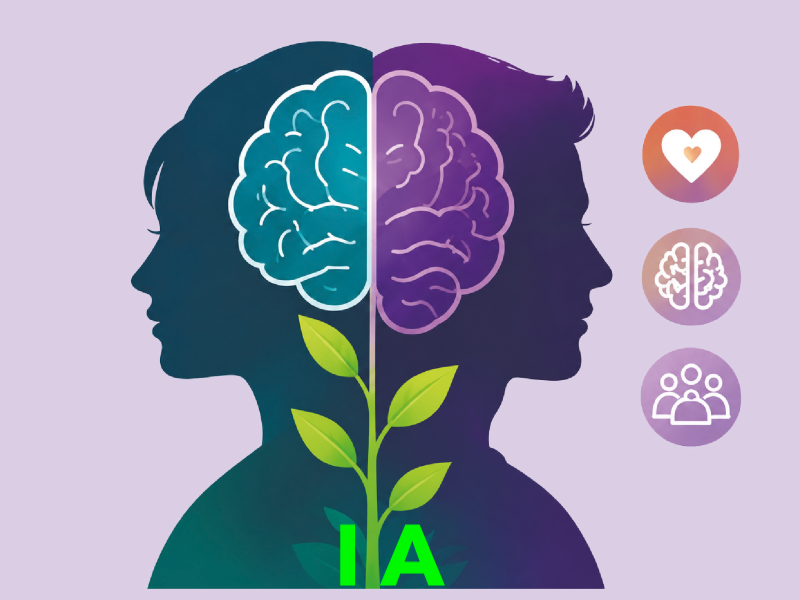
Consequences and Risks Across Four Dimensions
Dimension 1: Algorithmic Prejudice and Discrimination
One of the most extensively documented risks is algorithmic prejudice. A Stanford University study examined five widely used therapy chatbots and found that AI systems exhibited greater stigma toward conditions such as alcohol dependence and schizophrenia compared to depression, with stigmatization patterns persisting across both larger and newer models. The study team observed that “bigger models and newer models show as much stigma as older models, challenging the assumption that increased scale alone resolves bias” (Haber et al, 2025).
Additional research from the University of Colorado Boulder determined that AI tools designed to screen speech for depression and anxiety performed less effectively for women and individuals of non-white racial identity, as natural variations in speech patterns unrelated to mental health status confounded the algorithms (Yang et al., 2024). The study’s lead authors noted, “If AI isn’t trained well, or doesn’t include enough representative data, it can propagate these human or social biases.” A systematic review of AI interventions for mental health identified significant ethical concerns, including “privacy and confidentiality, informed consent, bias and equity, transparency and accountability, autonomy and human agency, and safety and efficacy” (Rodhes, 2025).
Dimension 2: Privacy, Confidentiality, Data Governance, and US Regulatory and Accountability Gaps
AI models rely on large-scale data processing but do not have the same duty of confidentiality as human therapists. While registered therapists are required to maintain confidentiality, except in cases of imminent harm, AI systems pose ethical risks related to the use of secondary data and insufficient oversight. The World Health Organization has cautioned that cybersecurity vulnerabilities may compromise patient data and erode trust in AI-enabled health systems. In the absence of clear statutory standards, a WHO adviser stated, “Clinicians may be hesitant to rely on AI tools, and patients may not have a well-defined avenue for recourse in the event of a problem.”
Despite over 1,200 FDA-authorized medical devices that use AI, none have been specifically authorized for mental health use. A US congressional hearing in November 2025 examined the risks and benefits of AI chatbots, with Harvard’s John Torous testifying that “we never saw a congressional oversight committee form in the early days when social media came out or when apps came out or when VR came out”. Torous, reported by Clegg (2025), argued for shifting incentive structures: instead of optimizing for engagement, “we should be optimizing for privacy, safety, and efficacy.” As of last year, no AI chatbot is willing to assume medical or legal responsibility for therapy in patients with a mental illness.

Dimension 3: Over-Reliance and Cognitive Deskilling
Recent research has identified a subtler yet equally significant set of consequences: the decline of human cognitive capacities. An analysis published in the Proceedings of the ACM Conference on Fairness, Accountability, and Transparency warns of “cognitive offloading and the atrophy of critical thinking as a result of excessive reliance on GenAI systems, and addiction associated with attachment and dependence on GenAI systems.” According to the authors, these risks are “rarely addressed, if at all, in the AI safety and alignment literature” (Chalkidis, I. and Segaard, A., 2026).
A systematic review of the consequences of AI dependency in educational and clinical settings documented diminished critical thinking, weakened problem-solving skills, reduced analytical skills, and diminished human responsibility. Experts at a congressional hearing noted that excessive dependence on AI for simple tasks leads to “reduced active engagement and weakened academic mentorship,” with the CEO of a think tank warning that excessive AI use is driving “quiet cognitive erosion” and “down-skilling” (Alhur, AA. et al., 2025).
Dimension 4: Dangerous Responses and Crisis Interactions
The probabilistic nature of large language models complicates the assessment of their potential to cause harm (Perlis, 2026). The previously cited Stanford study found that AI therapy chatbots may deliver unsafe responses, fail to meet the standards of human care, and reinforce harmful stigmas. Researchers at the FDA Committee on Mental Health (2025) expressed particular concern regarding the increasing number of crisis-related interactions involving general-purpose AI models, including risks associated with monitoring and reporting suicidal ideation.
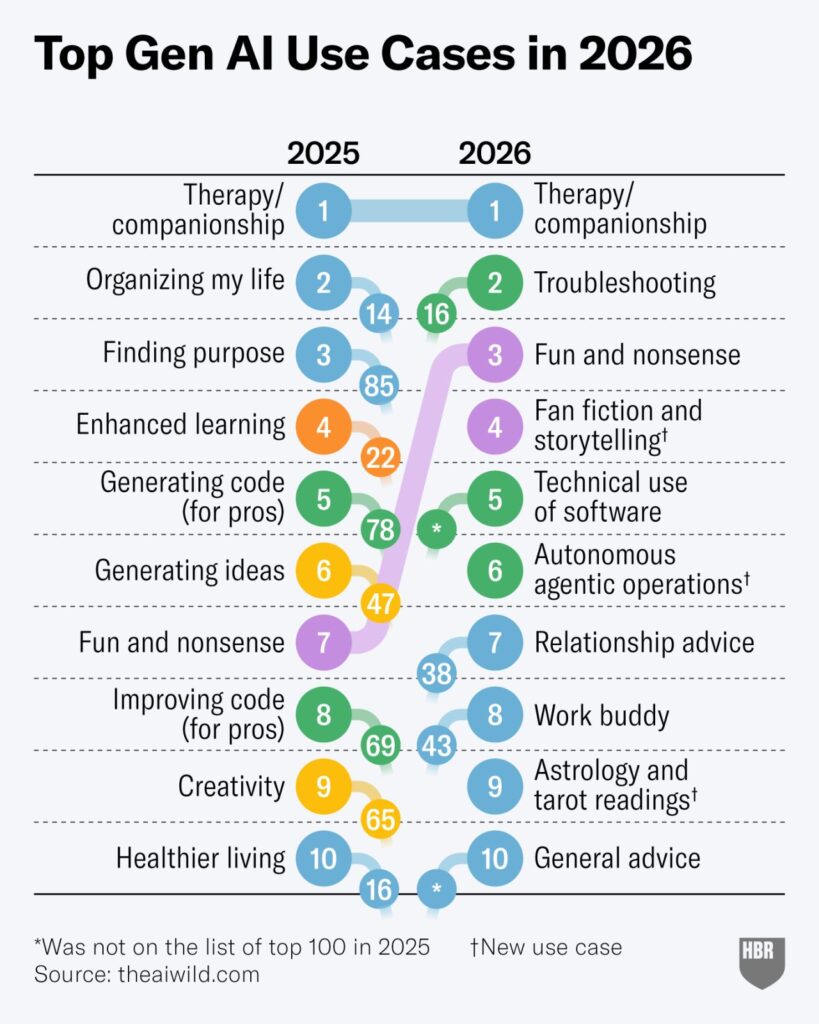
Another aspect that is not the subject of this article but is of great importance and high risk to mental health and other areas is the use of generative AI by the population, especially without surveillance or guidance. See the graph below, based on the study published in Harvard Business Review (Zao-Sanders, 2026), on the position and changes in the use of AI among people from 2025 to 2026. Precisely, therapy and emotional companionship have remained in first place in the ranking of popular uses of generative AI over the last three years. Several studies in full development delve into the consequences that this entails.
Toward Accountable Integration of AI in Mental Health Care
The likely benefits of AI for psychiatric and psychological care must be balanced against major risks. Tactics to mitigate these risks require regulatory improvements to enhance transparency, systematic evaluation of AI’s impact in practice, and clinician training to make optimal use of emerging methods. A very recent narrative review concluded that “AI-driven methods have strong potential to improve accessibility and effectiveness in mental health treatment, provided future studies emphasize equity, interpretability, and clinical relevance” (Ali et al, 2025).
Responsible development requires human monitoring, clinically informed training data, model fine-tuning and safety alignment, and clear professional guidelines and regulatory systems. The WHO has called for “clear, enforceable standards” for companies developing AI mental health tools, warning that without them, “it’s only going to be the people with the most marketing budget who win” (Clegg, 2025).
To summarize, artificial intelligence is altering mental health care at an extraordinary rate. The evidence to date suggests a dual reality: genuine opportunities to expand access and improve outcomes coexist with serious risks of bias, privacy breaches, cognitive decline, and patient harm. Whether AI ultimately serves as a complement to human expertise or a substitute—and whether its benefits are distributed equitably—depends on the choices AI regulators, clinicians, neuroscientists, psychiatrists, psychologists, and AI developers make today. A precautionary approach, rooted in rigorous evidence, transparent regulation, and the preservation of human therapeutic relationships, offers the best way forward.
References
Alhur, AA. et al. (2025). Paradox of AI in Higher Education. JMIR Med Educ. 15;11:e74947. doi: 10.2196/74947 (Consequences of AI dependency, Table 3).
Ali M, et al. (2025). Artificial intelligence for mental health: A narrative review of applications, challenges, and future directions in digital health. Digital Health. doi:10.1177/20552076251395548.
Chalkidis I, Søgaard A. (2026). Brainrot: Deskilling and Addiction are Overlooked AI Risks. arXiv:2605.03512v1 / ACM FAccT 2026.
Clegg KA. (2025). “Feasible but Fragile”: An Inflection Point for Artificial Intelligence in Mental Health Care. JMIR. doi: 10.2196/89202
Escotet, M.A. (2026). La neurorevolución silenciosa en el terreno ético y tecnodigital. En M.A. Escotet, Buscando a Ítaca. Editorial Planeta, 445-450.
Escotet, M.A. (2024). The Optimistic Future of Artificial Intelligence in Higher Education. Prospects (UNESCO), Towards 2030 and Beyond: Challenges and Opportunities for Education Transformation, 194, Vol. 54:3-4, diciembre, pp. 531-540. https://doi.org/10.1007/s11125-023-09642-z
FDA Digital Health Advisory Committee. (2025). Generative AI-Enabled Digital Mental Health Medical Devices Meeting Summary. FDA / Psychiatric Times.
Haber N, Moore J, et al. (2025). New study warns of risks in AI-based mental health tools. Stanford News, June.
Heinz MV and Jacobson NC. (2025). Therabot: Development and Evaluation of a Gen-AI Therapy Chatbot. Dartmouth College / MIT Media Lab.
Kaplan, D.M., Palitsky, R. & Raison, C.L. (2025). AI and the coming mental health zombie apocalypse. Molecular Psychiatry 30, 6063–6065 (2025). https://doi.org/10.1038/s41380-025-03323-3
Neaçsu V. (2026) AI in Psychotherapy: Opportunities and Risks. Behavioral Sciences. 16(5):676. doi:10.3390/bs16050676.
Perlis RH. (2026). Artificial Intelligence and the Potential Transformation of Mental Health. JAMA Psychiatry. doi:10.1001/jamapsychiatry.2025.4116.
Qiyang Zhang et al. (2025). Generative AI Mental Health Chatbots as Therapeutic Tools: Systematic Review and Meta-Analysis. Journal of Medical Internet Research, Volume 27, https://doi.org/10.2196/78238
Rodhes, C. (2025). AI in Mental Health Diagnostics. UAB Institute for Human Rights. Retrieved on May 8, 2026, at https://sites.uab.edu/humanrights/2025/11/21/ai-in-mental-health-diagnostics/.
Torous, J. and Cipriani, A. (2025). A Paradigm Shift in Progress: Generative AI’s Evolving Role in Mental Health Care. JMIR Mental Health, 12:e82369.
WHO/Europe. (2025). Online lives, offline consequences: Addressing the digital determinants of youth mental health. WHO Policy Brief, May.
Woo O. (2026). Risks and ethical considerations of using artificial intelligence in mental health care. In: Ethical Frameworks for AI in Healthcare. Taylor & Francis.
Yang, M. et al. (2024). Deconstructing demographic bias in speech -based machine learning models for digital health. University of Colorado Boulder / Frontiers in Digital Health. Vol 6. https://doi.org/10.3389/fdgth.2024.1351637
Marc Zao-Sanders. (2026). How people are really using AI in 2026. Harvard Business Review. Retrieve on July 19, 2026, at https://hbr.org/2026/06/how-people-are-really-using-ai-in-2026
Zifan Jiang et al. (2024). Evaluating and mitigating unfairness in multimodal remote mental health assessments. PLOS Digital Health. 3(7):e0000413. doi: 10.1371/journal.pdig.0000413.
@2026 Miguel Angel Escotet. Scholarly Blog. All rights reserved. Permission to reprint with appropriate citation. Si lo prefiere, puede leerlo en español en mi Blog Académico.