
- April 21, 2026
- AI, Applied Science, Artificial Intelligence, Essay, Humanism, Social Ethics, Technology
As artificial intelligence becomes integrated into the economic and social mainstream over the next 3–7 years, its benefits are widely celebrated. However, three significant negative social consequences are likely to emerge: the erosion of meaningful human agency in labor, the collapse of shared digital truth, and the atrophy of critical social skills. In this essay of personal reflections, I briefly examine these risks and argue that, without proactive governance and society, AI will deepen existing inequalities and weaken the social fabric.
Since my transition from engineering to psychology, I have become increasingly fascinated by the social brain, which underpins human adaptation to the environment. This interest has led me to focus on cultural and social learning. Technology, as the practical application of scientific discoveries to societal needs, serves as a foundation for both innovation and ethical considerations. While science itself is neutral, the actions of scientists and practitioners are not always impartial. For example, nuclear fission can be harnessed for life-saving cancer therapies or, conversely, for the creation of weapons of mass destruction. Ultimately, the social consequences of any new technology or scientific discovery depend on the human being and on the societal rationale behind its use. This concern is particularly salient to me regarding transformative technologies such as artificial intelligence (AI). AI is an enduring and advancing force; if directed toward societal and human well-being, it can fulfill its technological, psychological, and ethical potential. However, it is essential to consider the possible social consequences of its application.
The debate surrounding artificial intelligence has long been divided between utopian visions of post-scarcity abundance and dystopian nightmares of robotic overlords. However, the near future will likely bring about something more subtle and insidious: not a violent revolution, but a quiet erosion of the social structures that have traditionally shaped human life. As AI transforms from a tool we use into an actor we interact with, its most profound effects will not be economic or technological but deeply social. Over the next few years, we will encounter a wave of changes: the disintegration of public trust, the algorithmic shaping of identity, the loneliness born from frictionless convenience, and the silent accumulation of power into probabilistic black boxes.
As artificial intelligence becomes integrated into the economic and social mainstream over the next 3–7 years, its benefits are widely celebrated. However, three significant negative social consequences are likely to emerge: the erosion of meaningful human agency in labor, the collapse of shared digital truth, and the atrophy of critical social skills. In this essay of personal reflections, I briefly examine these risks and argue that, without proactive governance and society, AI will deepen existing inequalities and weaken the social fabric.
The Epistemic Crisis: When Reality Becomes Negotiable
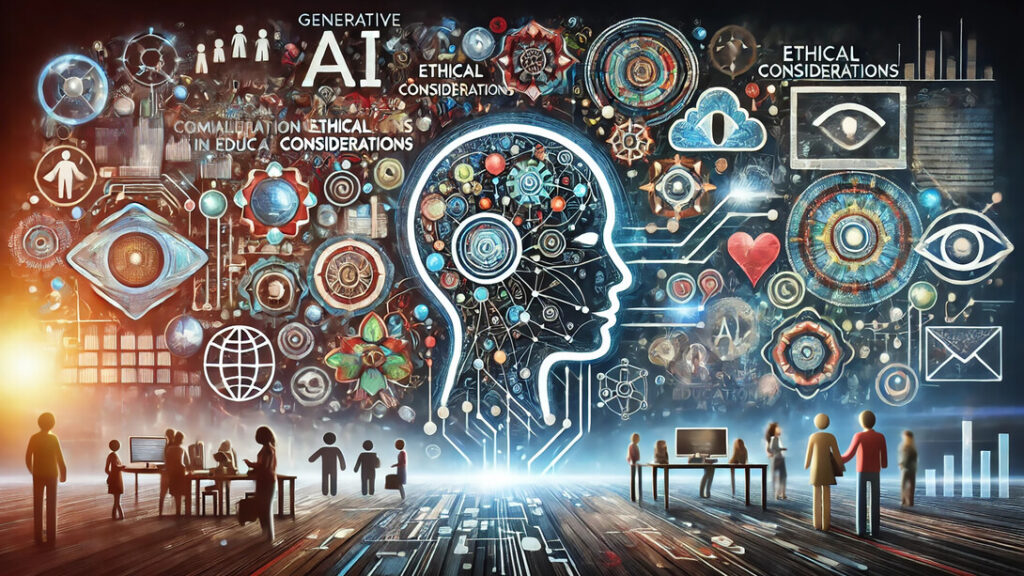
The first major societal consequence will be the ultimate breakdown of shared objective reality. Social media algorithms initially set this process in motion by optimizing for outrage and engagement, but generative AI will complete it by democratizing disinformation. Near-future AI will generate hyper-personalized, context-aware synthetic media—not just deepfake videos of politicians, but real-time fabricated text, audio, and images tailored to an individual’s psychological profile. The result is not just that lies spread faster than truth, but that truth loses its epistemic significance. When a video of a world leader saying something incendiary can be created in seconds and denied just as quickly, every piece of evidence becomes suspect. Trust—the social lubricant of democracies, commerce, and communities—will disintegrate into tribal verification networks. We will not disbelieve everything; we will believe whatever our AI-augmented reality confirms. The outcome will be a society where argument becomes impossible because facts are no longer shared—they are generated on demand.
The Relational Replacement: Intimacy Without Obligation
One of the most psychologically destabilizing shifts will occur in personal relationships. AI companions, therapists, and romantic partners are already emerging, but in the near future, many will become indistinguishable from human interaction for routine social needs. The societal consequence is the rise of “friction-free relationships”—bonds that offer emotional rewards without the demands of reciprocity, vulnerability, or conflict. Why endure a difficult conversation with a partner when an AI offers unconditional positive regard? Why risk rejection when a synthetic friend is always available? The danger is not that people will eliminate all human contact, but that they will outsource difficult parts of social life—accountability, compromise, forgiveness—to machines. This will create a generation skilled in social performance but fragile in practice, unable to handle the inevitable disappointments of human relationships. The consequence is not the end of love but its hollowing out into a consumer transaction.
The Labor of Dignity: The Two-Tier Social Contract
Much has been written about job displacement, but the near-future social consequence is more nuanced: the splitting of human worth. As AI automates mid-skill cognitive work (such as accounting, legal research, content creation, and some diagnostics), the economy will polarize into low-touch, low-autonomy service roles and high-trust, high-creativity positions requiring genuine human judgment. However, the social damage will not be limited to unemployment; it will involve the loss of dignity through contribution. For centuries, work has provided not just income but social identity, purpose, and a narrative of self-worth.
When a large portion of the population is confined to roles that serve only to support algorithmic systems—supervising automated processes, performing emotional labor for AI interfaces, or cycling through interchangeable gigs—the social contract unravels. We risk creating a class of people who are economically unnecessary but socially essential as consumers. The resulting status anxiety, resentment, and search for scapegoats will fuel political instability, as those deprived of meaningful agency turn toward authoritarian solutions promising to restore a perceived lost order.
The Algorithmic Third Party: The End of Direct Negotiation
AI will reshape the core of human decision-making by acting as an invisible mediator. Consider hiring when algorithms that already screen résumés, for instance. Soon, they will conduct initial interviews, negotiate salaries, and evaluate cultural fit—all based on models trained on the performance of past successful employees. The same will hold true for loan applications, college admissions, rental agreements, and even dating. The societal consequence is the end of the exception. Human systems have always relied on discretion—the ability of one person to look another in the eye and say, “I see something the numbers missed.” But AI systems are designed to optimize for patterns, not anomalies. The result is a society with unprecedented predictability and rigidity. People will learn to adapt themselves to the algorithm—curating digital footprints, adjusting speech, even changing appearances—not because they are forced, but because the alternative is systematic exclusion. The social world becomes a performance for silent, opaque judges.
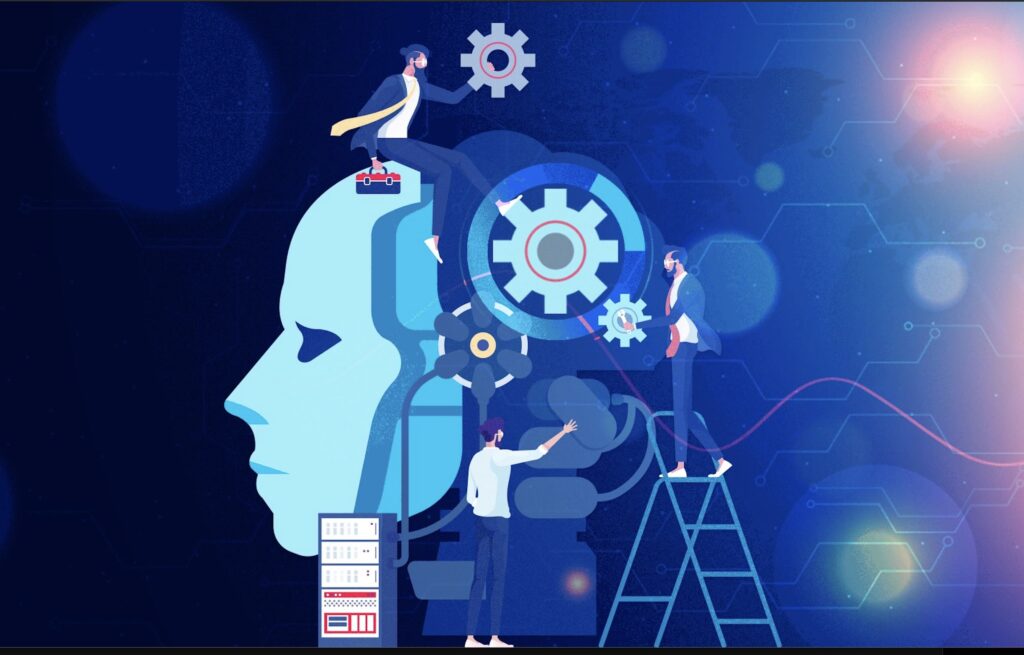
Three Near-Future Social Consequences of Widespread AI Adoption
The “near future” of AI (approximately 2027–2030) will be characterized not by artificial general intelligence, but by the deep embedding of narrow, generative, and predictive AI into everyday systems. While efficiency will increase, silent and structural harms will also proliferate. The major consequences are outlined below.
Consequence One: The Precariat of Invisible Labor
The most immediate social consequence is the creation of a new precariat: humans performing low-visibility, high-stakes labor to train or supervise broken AI systems. Content moderators, data labelers, and autonomous vehicle remote operators will face worsening psychological distress from exposure to traumatic content and monotonous, algorithmically paced work. Simultaneously, the rhetoric of full automation will be used to suppress wages for traditional roles (e.g., writers, coders, designers) whose output is now used as training data, creating a class of workers who are economically essential but socially invisible and disposable.
Consequence Two: The Death of Shared Reality
AI-generated synthetic media (text, images, audio) will, by 2028, be indistinguishable to the average person from authentic human creation. The social consequence is not merely misinformation but the collapse of epistemic trust. Every personal video, audio recording, or official document can be plausibly denied as AI-generated. This liar’s dividend will empower bad actors—from abusive spouses denying evidence to corporations voiding contracts. More destructively, citizens will retreat into personalized, AI-curated reality bubbles, erasing any remaining shared public forum for democratic deliberation.
Consequence Three: The Atrophy of Relational Skills
A less visible but equally profound consequence is the social deskilling of the population. As AI tutors, companions, and therapists become ubiquitous, the low-stakes friction of human interaction—negotiating with a friend, managing a child’s boredom, or resolving a workplace dispute—will be systematically avoided. The near-future risk is an entire generation that outsources emotional labor to machines, leading to a decline in empathy, conflict resolution, and tolerance for difference. Social bonds, built on mutual effort and occasional failure, will weaken into shallow, on-demand transactions.
In summary: The governance of proximity and individual and social action
These effects share a common thread: the near-term social impact of AI will be shaped not by what it does to individuals, but by what it does between them. AI will mediate access to truth, love, dignity, and opportunity. The crucial political question of the coming decade is not how to stop AI, but how to regulate its role as a social actor. Addressing this challenge requires moving beyond both the libertarian perspectives of the technology industry and the nostalgic resistance of its critics. A new social agreement is necessary: mandatory transparency for algorithmic decision-making, legally required human resources for important decisions, and, perhaps most prominently, the deliberate preservation of friction—those awkward, inefficient, and costly human processes such as juries, town halls, and face-to-face negotiations that have historically fostered trust. The intelligence of machines will not determine the near future; rather, it will be determined by the collective willingness to decide where to limit their influence.
The last three consequences of AI adoption are not technological inevitabilities but failures of social foresight. Soon, the most dangerous AI will not be a super-intelligent rebel, but a banal, obedient tool that quietly dissolves human agency, trust, and connection. Mitigation requires immediate action: legally mandated human-in-the-loop requirements for critical decisions, robust digital provenance standards, and a public health campaign on AI literacy and social skill retention. Without these interventions, the future will not be dystopian in a cinematic sense, but simply impoverished—a lonelier, more confusing, and less just version of today.
My own recent references on this cavillation
Escotet, M.A. (2026). Buscando a Ítaca. [Looking for Ithaca]. Barcelona: Planeta. (Forthcoming in May).
Escotet, M.A. (2024). «The Optimistic Future of Artificial Intelligence in Higher Education.» Prospects (UNESCO), Towards 2030 and Beyond: Challenges and Opportunities for Education Transformation, 194, Vol. 54:3-4, diciembre, pp. 531-540. https://doi.org/10.1007/s11125-023-09642-z.
Escotet, M.A. (2023). «The Bright Side of AI in Teaching and Learning.» The Academic. https://theacademic.com/ai-in-teaching-and-learning/.
@2026 Miguel Angel Escotet. Scholarly Blog. All rights reserved. Permission to reprint with appropriate citation. Also, you can read this essay on LinkedIn.
Si lo prefiere, puede leerlo en español en mi Blog Académico.