
- September 1, 2025
- Business, Development, Economics, Education, Essay, Philosophy, Planning, Social Philosophy, Sociology
The purely expansionist ‘realistic’ strategic planning model typifies today’s society and causes an anticlimax in planning, turning it into a simple matter of forecasting, systematic organization, and the subordination of desirable human goals to foreseeable economic development. Does strategic planning make all the right moves? Utopian thinking becomes a way of testing the boundaries of our imagination to develop a better world.
The concept of development has been employed in economics, sociology, and education under various ideological labels and for diverse planning purposes. However, the primary reason for emphasizing the role of education in development is its ability to produce the skilled manpower necessary to meet a country’s socio-economic needs. Thus, education has come to be regarded, in our view wrongly, as a supplier of ‘human resources; it has been turned into a formal institution concerned in practice with the immediate provision of trained skills and aptitudes, in which human beings are perceived as agents of production, their social, cultural, and civic roles being relegated to the background.
Education has thus ceased to be a permanent, lifelong process and has become a system for awarding certificates, promoting social values and attitudes that are founded solely on paper qualifications and competition. It produces students whose primary aim is the prestige of a diploma or degree, rather than a genuine pursuit of knowledge and its furtherance beyond school and university.
In addition, the economic theory of development has now become obsessed with attaining economic indices of expansion as quickly as possible, without pausing to analyze the effects of these changes on the lives of men and women. Greater emphasis is set on the production of goods than on the creators and users of these goods, assuming that production will indirectly benefit society.
This development process is reflected in the theory and practice of strategic planners, who try to predict foreseeable changes by applying to reality the measures they consider suitable to bring about such changes. Seen in this light, strategic planning marks a departure from the search for an ideal world and becomes merely a forecasting technique.
The Utopia/reality dilemma is the epistemological representation of the divide between the desirable and the possible, between a world that does not exist and a temporarily established order, between planning the future and planning the present, and between sustainable development and growth. Utopia and reality are terms commonly used, in our view wrongly, to portray idealism and pragmatism as incompatible ways of life. Added to this is the idea, deeply rooted in today’s consumer-dominated society, that Utopia is a matter for idle speculation and fanciful imagination, leading nowhere.
Without entering into the philosophical discussion of utopian and anti-utopian thought, which began in the early seventeenth century, following the work of Sir Thomas More, and has continued up to the present day with several analytical studies, we must establish the relationship between an ideal world and the learning process by defining what, in practice, is meant by utopia. The Greek etymology ou (not, no) and topos (place), in other words, a place or world that does not exist, does not necessarily mean that this world could not exist. It was precisely in Thomas More’s Utopia that the concept came to mean a plan or idea that is desirable but unrealizable in the established order of the present.
The concept of Utopia has evolved in two distinct ways. The first, according to the ‘phalanx’ theory of Fourier, takes unreality and 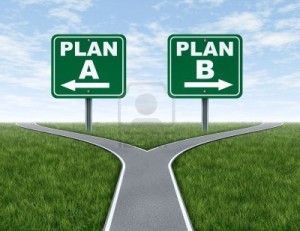 constructs an imaginary reality or another unreality. The second, on the other hand, takes existing reality as the starting point for representing a different and better world, based on another possible future reality. We consider the second view to be essential to any future social planning strategy, and we take issue with the ‘anti-climax’ of the contemporary strategic planning theory.
This ‘anti-climax’ is consistently evident in writings on social, economic, and educational planning. In most cases, the objectives set by planners do not differ significantly from the objectives inherent in the natural and inevitable growth of any society. An existing reality is considered to prepare, or rather organize, strategies to attain a foreseeable reality, often the product of economic growth or development, according to Robert L. Heilbroner’s theory.
This concept of development aims at producing a take-off point at which wealth, defined as productivity plus finance, exceeds domestic consumption; this explains the effort to expand gross national product (GNP). As a rule, take-off is achieved by increasing agricultural production, industrialization, and high-tech, biotech, and info-tech output, accompanied by new institutions to manage the planned expanding economy. The result is that the development-oriented system expands formal education to produce trained manpower, or human resources, that constitutes a professional class, and modernizes a country.
This purely expansionist strategic planning model typifies today’s society and causes an anticlimax in planning, turning it into a simple matter of forecasting, systematic organization, and the subordination of desirable human goals to foreseeable economic development. This type of strategic planning is limited to short-term and fragmented approaches. Planning tends to identify objectives rather than create them, to maintain reality rather than transform it, and to match needs rather than expectations to resources.
We shall refer to this type of strategic planning as ‘realistic’ because it pairs reality with reality, aggregates and allocates resources, and is based on a pre-established possible perspective. This is modern planning, devoid of creative imagination and innovation, not designed to change the course of society, amounting to no more than a programming technique. Decisions are made, but there is no thought behind them. The decision is simply a matter of attributing logical patterns of existence to objects, and this is typical of contemporary rational planning. Additionally, uncertain events are challenging to address with linear or ramification models of strategic planning.
We must go beyond the mere analysis of a situation to see how its components interrelate and can be projected into the future. However, the concept of ‘Utopian planning’ -thinking towards a climax—gives scope for reasoning, reflection, imagination, innovation, and disruption, and provides the first link in the chain of human dignity and change.
Utopian planning combines the desirable and the possible, not the possible and reality. The objective must always be desirable, perhaps impossible in today’s estimation, but likely at a future date. The planning methodology is organized in reverse order, starting from the utopian goal and working backward to  the present reality. Society sets its course in the direction of Utopia, and even when it does not reach it, it continues on that course. This ideological strategy differs significantly from the development-oriented concept, which focuses solely on short-term objectives, without considering the lives of our children and grandchildren. Incapable of portraying the human being of the future, it makes people slaves of their creations. The development-oriented model is marred by contradictions due to its lack of long-term objectives and is unable to maintain the ecological balance that is crucial to human survival.
Conclusive proof of the failure of ‘realistic’ strategic planning is the fact that more problems than solutions have arisen in the field of education. Here are some examples:
1. The model assumes that the development of the economy (the primary, secondary, and tertiary sectors) requires skilled human resources and that the formal education system adequately satisfies these needs. Paradoxically, there is a decline in the quality of education, compounded by the great demand for it from society, which Utopian planning of education and development assumes that the higher the level of education, the better the job prospects. What the system promotes is not education, but the acquisition of certificates and diplomas; the individual is motivated by the acquisition of qualifications, not by the pursuit of knowledge, which alone genuinely inspires high educational standards. Diplomas are prized more than learning itself.
2. The ‘realistic’ strategic model emphasizes the training of human resources to meet the economy’s needs, yet never before have there been more educated people out of work than in today’s society, apart from those in occupations for which they have not been educated. This also occurs in the non-capitalist, development-oriented model, where vocational training is not related to the individual but to a productive system that perpetuates a dominant social structure, to increase production rather than modify the social relations inherent in the productive system. The primary difference between the two types of social and political organizations lies in their efficiency and bureaucracy. The capitalist system is not as efficient in absorbing human capital, but it is more selective in the jobs offered. In contrast, the socialist system employs surplus-trained manpower and creates a bureaucracy.
3. The ‘realistic’ planning model, whether at the institutional or national level, is based on existing needs and devises a comprehensive strategy to meet them. This is referred to as a short- or medium-term plan. However, bearing in mind that the formal education system takes a minimum of eighteen years to complete its product, it will be seen that at the end of that period, a new generation will have been trained to meet needs and objectives which are two decades out of date. When a group of planners gets together to draw up a teacher-training program, for example, they take as their basis current trends, on the assumptions obtaining for a teacher today; nobody dares admit that the new curriculum should educate a teacher for the coming five years, especially in view of the fact that we are living in a world flooded with new knowledge, with a highly mobile population and (especially in the poorest countries) alarming population growth rates. We can compare education to the planting and harvesting of fruit. It is not only a matter of time but also of the type of seed, soil, treatment, and ripening before the harvest is gathered. What happens during the planting and ripening stages will depend on the efforts we are prepared to make.
These three problems, stemming from the development-oriented model, are closely linked components of a broader issue. The world does not know where it is going; every day, the human being loses slightly more control over their destiny, or, obsessed with surviving from day to day, lets it slip from their grasp. Our only hope lies in planning Utopia and aiming for it with single-minded determination. Utopian thinking becomes a way of testing the boundaries of our imagination to develop a better world. The planning of Utopia is a permanent feature of society, as it changes when it is attained or, rather, when it is within our grasp. We then see that our Utopia has become a reality and that a new one has taken shape.
——————————
©2025 Miguel Angel Escotet. All rights reserved. Permission to reprint with appropriate citation. Based on my article published by UNESCO (Prospects), Utopian Planning of Education and Development, 60, 15-32.